
Take a taxi with one phrase: ~까지 가 주세요
The place name goes first and the rest never changes. Seoul Station, Myeongdong, the airport: swap the place and you're done.
What this lesson covers
A whole taxi ride takes one sentence: 서울역까지 가 주세요 (to Seoul Station, please). The destination goes first, and everything after it stays the same.
까지 (kkaji) means “to” or “as far as,” and it attaches to the end of the place name. English puts “to” before the place; Korean puts it after. The phrase 가 주세요 (please go) uses 주세요, the polite request you used to order food. After a noun it means “please give me”; added to 가 (go) it asks someone to do something for you, so in a taxi it means “please take me there.”
The pattern
One pattern, four situations. All four dialogues below practice it.
Place + 까지 가 주세요 To ~, please
Getting in a taxi takes one line:
Place + 까지 가 주세요
To ~, please.
- 까지 means "to / as far as" and attaches right to the place name.
- 가 주세요 means "please go" — the same 주세요 as "please give me".
- 서울역까지 가 주세요 (To Seoul Station, please) / 공항까지 가 주세요 (To the airport, please)
The driver usually answers 네, 알겠습니다 (Sure, got it), and says 다 왔어요 (We're here) on arrival.
Say 감사합니다 (thank you) when you get out.
More examples
- 홍대까지 가 주세요. → To Hongdae, please.
- 호텔까지 가 주세요. → To the hotel, please.
- 강남역까지 가 주세요. → To Gangnam Station, please.
Easy to get wrong
까지 comes after the place
English says “to Myeongdong”; Korean says 명동까지. In Korean, small words like this attach to the end of the noun, so “까지 명동” is wrong. When you change the destination, keep 까지 attached to the new place name.
Don't read the romanization letter by letter
서울역까지 is romanized seoullyeokkkaji: the k at the end of 역 runs straight into the kk of 까지, so the spelling shows three k's in a row. In speech they blend into one strong, tense k, held a little tighter than an English k. The audio for each line is a better guide than the spelling.
Two ways the driver says “got it”
In the dialogues the driver answers 네, 알겠습니다 once and 네, 알겠어요 once. Both mean “okay, got it.” The first is more formal, the second more everyday. Either one means the driver understood you.
Scene 1 of 4
Taking a taxi from the airport
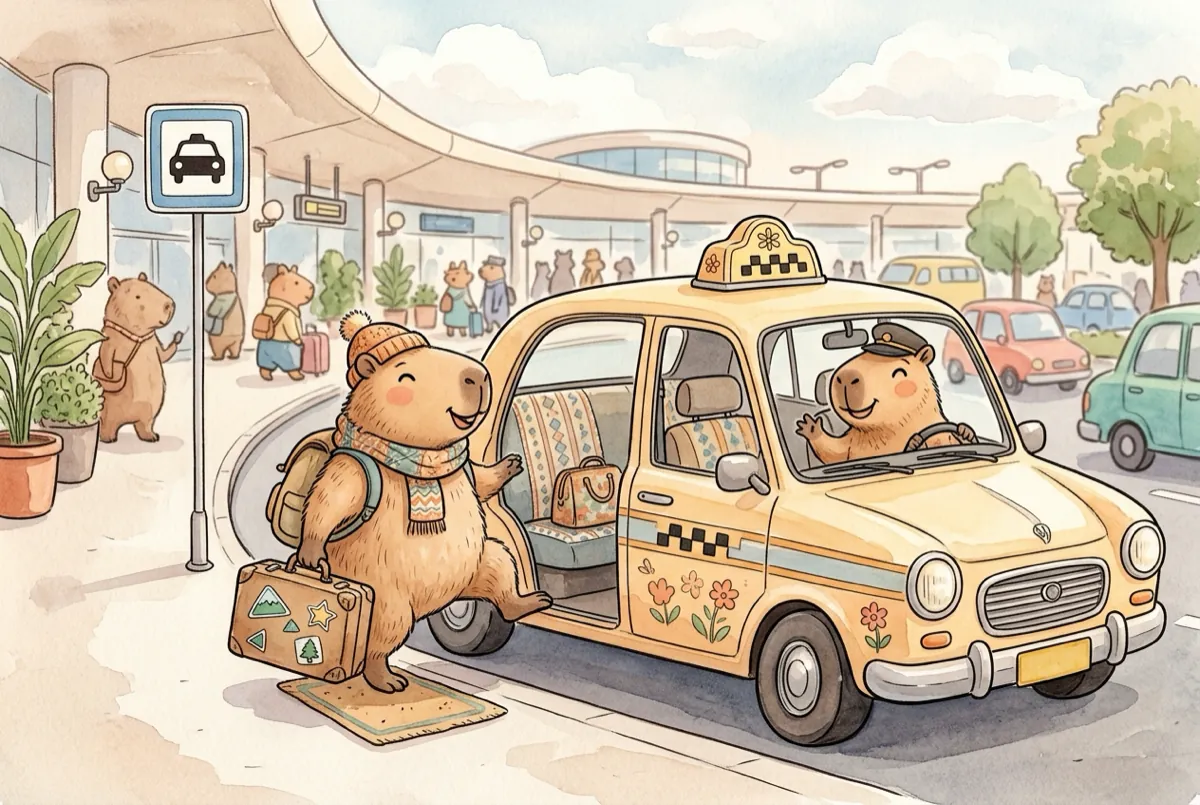
Leaving the airport. The destination is 서울역 (Seoul Station).
Dialogue
You
서울역까지 가 주세요.
seoullyeokkkaji ga juseyo.
To Seoul Station, please.
Driver
네, 알겠습니다.
ne, algetseumnida.
Sure, got it.
Scene 2 of 4
Heading back after shopping

Heading back after shopping: 명동 (Myeongdong).
Dialogue
You
명동까지 가 주세요.
myeongdongkkaji ga juseyo.
To Myeongdong, please.
Driver
네.
ne.
Okay.
Scene 3 of 4
The day you fly home
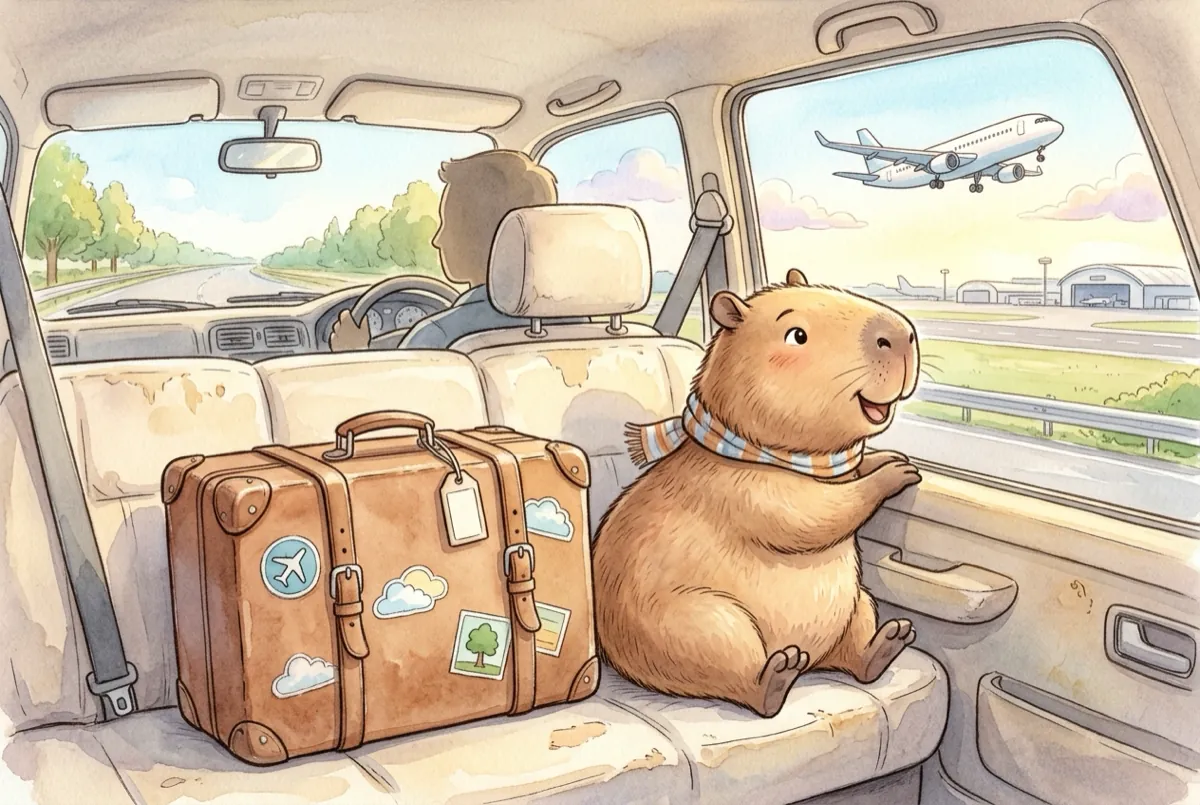
The day you fly home: 공항 (the airport).
Dialogue
You
공항까지 가 주세요.
gonghangkkaji ga juseyo.
To the airport, please.
Driver
네, 알겠어요.
ne, algesseoyo.
Okay, got it.
Scene 4 of 4
Arriving
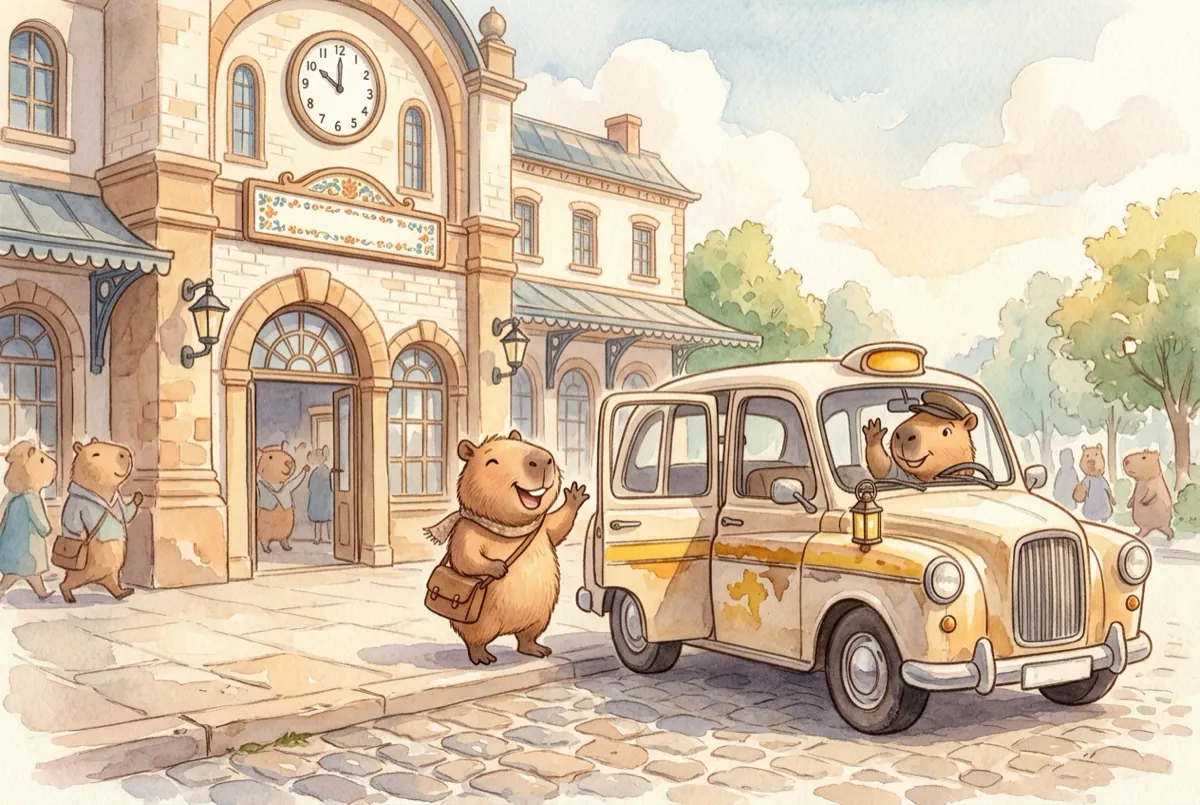
When you arrive, the driver says one line and you answer with thank you.
Dialogue
Driver
다 왔어요.
da wasseoyo.
We're here.
You
감사합니다!
gamsahamnida!
Thank you!
Word list
16 words, grouped by scene.
Scene 1: Taking a taxi from the airport5 words
- 서울역seoullyeokSeoul Station
- 까지kkajito, as far as
- 가 주세요ga juseyoplease go (to)
- 네neyes, okay
- 알겠습니다algetseumnidaunderstood (formal)
Scene 2: Heading back after shopping4 words
- 명동myeongdongMyeongdong
- 까지kkajito, as far as
- 가 주세요ga juseyoplease go (to)
- 네neyes, okay
Scene 3: The day you fly home5 words
- 공항gonghangairport
- 까지kkajito, as far as
- 가 주세요ga juseyoplease go (to)
- 네neyes, okay
- 알겠어요algesseoyogot it
Scene 4: Arriving2 words
- 다 왔어요da wasseoyowe're here
- 감사합니다gamsahamnidathank you
Check yourself
True or false? Decide first, then open the answer. 6 questions.
까지 means "to" and goes after the place name.
○ True
공항까지 가 주세요 means "To the airport, please".
○ True
When the driver says 다 왔어요, it means "We're here".
○ True
까지 goes before the place, e.g. 까지 명동.
✕ False
까지 attaches after the place: 명동까지.
가 주세요 means "please give me".
✕ False
가 주세요 means "please go (there)"; "please give me" is 주세요.
공항 means "hotel".
✕ False
공항 is the airport; a hotel is 호텔.
Questions
How do I tell a taxi driver where to go in Korean?
Say the place, then 까지 가 주세요. For example 공항까지 가 주세요 (to the airport, please).
What does 까지 mean?
“To” or “as far as.” It goes right after the place name.
What does the driver say when you arrive?
다 왔어요 (we're here). Answer with 감사합니다 (thank you).
Next
Hear every line and say it back
In the app this lesson is under Scenario Packs › Starter · Getting Around 1: play each line, repeat after it, tap a word to see its meaning, then take the quiz.
On iOS and Android. Made by a team in Taiwan.