Order anything with one phrase: 이거 주세요
Put what you want in front of 주세요. Don't know the word? Point and say “this one.” It works at a bakery, a café, a convenience store and a street stall.
What this lesson covers
This lesson has one pattern, and it may be the one you use most on a trip: 주세요 (juseyo), “please give me.” Whatever you put in front of it is what you're asking for. Coffee, water, tteokbokki: the name goes first and 주세요 goes last.
If you don't know the word, 이거 (igeo) means “this one.” Point at the display case or the photo on the menu and say 이거 주세요. The four dialogues go from a bakery to a street stall, and every order uses the same pattern.
The pattern
One pattern, four situations. All four dialogues below practice it.
Noun + 주세요 ~, please + 이거 this one
Ordering food or buying things takes just one pattern:
Noun + 주세요
~, please. Just put what you want in front.
- 커피 주세요 (A coffee, please) / 물 주세요 (Water, please)
이거
this one. Can't read the menu? Point and say 이거 주세요.
Two things staff often say — just understand them: 뭐 드릴까요? (What can I get you?) and 여기요 (Here you go).
More examples
- 우유 주세요. → Milk, please.
- 김밥 주세요. → Gimbap, please.
- 이거 주세요. → This one, please.
Easy to get wrong
주세요 comes after the item
In English, “please” can move around: “please, a coffee” or “a coffee, please.” 주세요 can't move. The item comes first and 주세요 comes last, so 커피 주세요 is right and “주세요 커피” is wrong. This is also one of the quiz questions below.
Point and say 이거
이거 means “this one.” Most food shops in Korea show photos or the food itself, so 이거 주세요 gets you what you want without knowing a single food word. Menus change from shop to shop; this phrase works in all of them.
Staff lines you only need to understand
뭐 드릴까요? is “What can I get you?”, 여기요 here means “here you go,” and 잠깐만요 is “just a moment.” You don't need to say these yet. Recognizing them tells you whether it's your turn to speak or the other person is just keeping you posted.
Scene 1 of 4
At the bakery
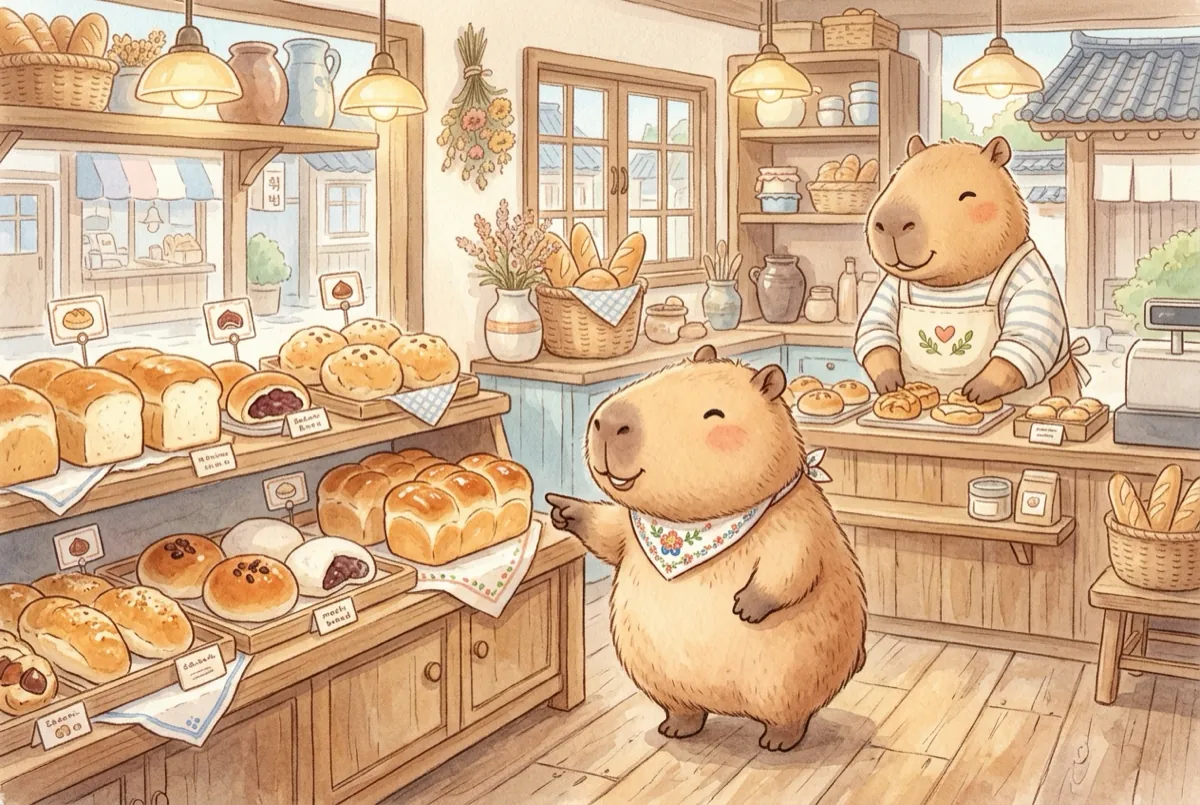
The simplest version: you don't need the name, you just point.
Dialogue
Staff
어서 오세요.
eoseo oseyo.
Welcome.
You
이거 주세요.
igeo juseyo.
This one, please.
Scene 2 of 4
At the cafe
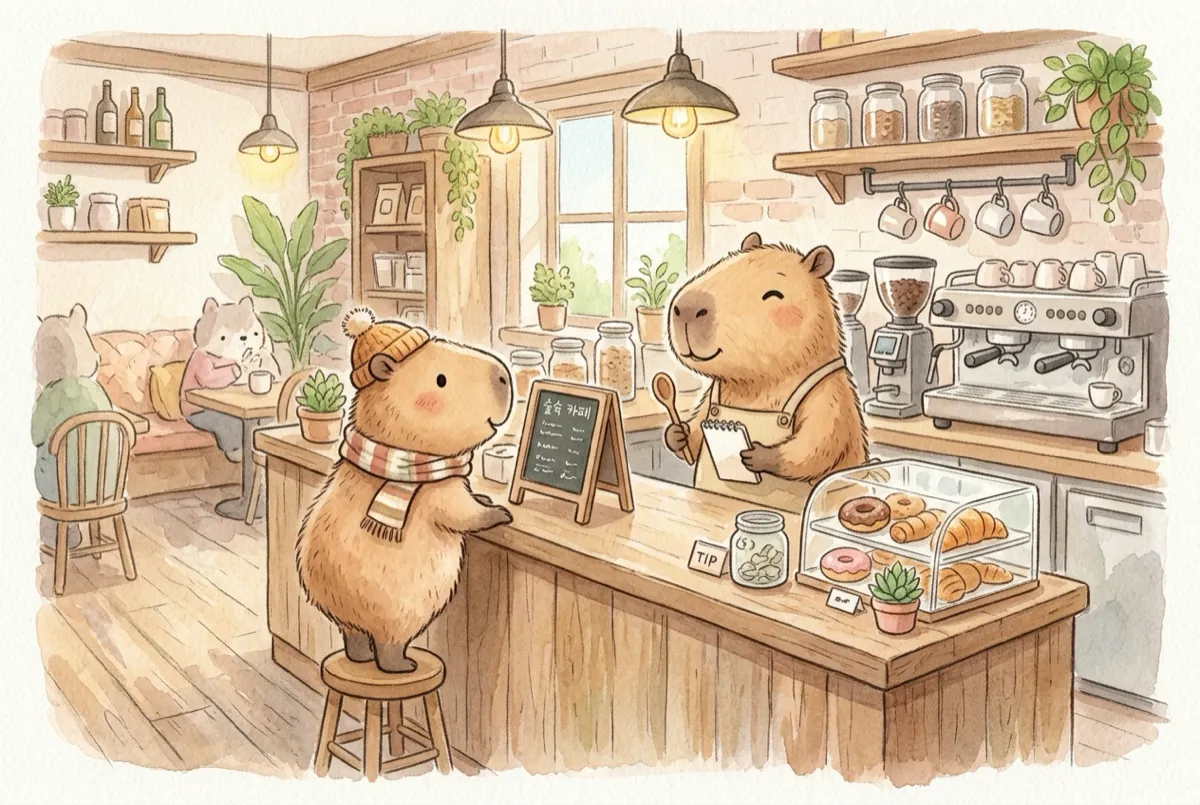
The barista asks what you'd like. Put the item's name into the same pattern.
Dialogue
Staff
뭐 드릴까요?
mwo deurilkkayo?
What can I get you?
You
커피 주세요.
keopi juseyo.
A coffee, please.
Scene 3 of 4
At the convenience store
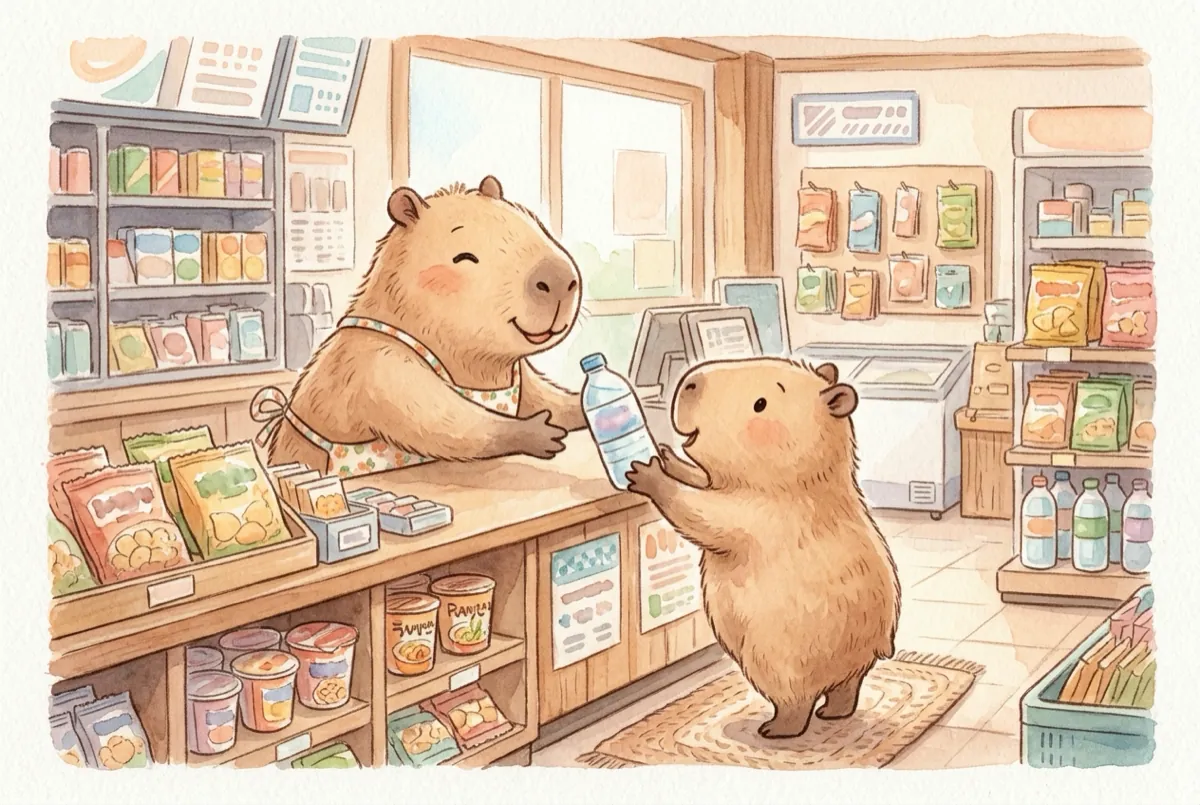
At the convenience store it's 물 (water). The pattern doesn't change.
Dialogue
You
물 주세요.
mul juseyo.
Water, please.
Staff
네, 여기요.
ne, yeogiyo.
Sure, here you go.
Scene 4 of 4
At the tteokbokki stall
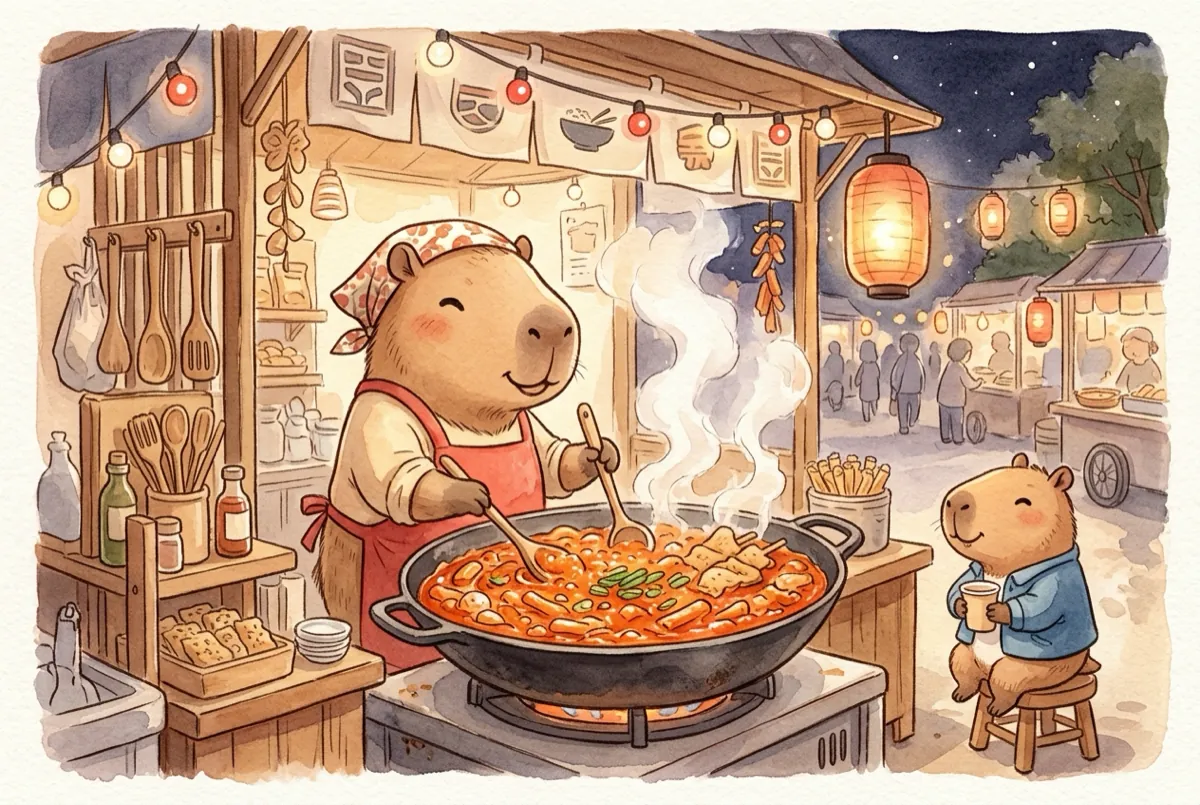
Same at a street stall. The vendor's reply means “just a moment.”
Dialogue
You
떡볶이 주세요.
tteokbokki juseyo.
Tteokbokki, please.
Staff
네, 잠깐만요.
ne, jamkkanmanyo.
Sure, just a moment.
Word list
15 words, grouped by scene.
Scene 1: At the bakery3 words
- 어서 오세요eoseo oseyowelcome
- 이거igeothis (one)
- 주세요juseyoplease give me
Scene 2: At the cafe4 words
- 뭐mwowhat
- 드릴까요deurilkkayoshall I give you (polite)
- 커피keopicoffee
- 주세요juseyoplease give me
Scene 3: At the convenience store4 words
- 물mulwater
- 주세요juseyoplease give me
- 네neyes, okay
- 여기요yeogiyohere you go
Scene 4: At the tteokbokki stall4 words
- 떡볶이tteokbokkitteokbokki (spicy rice cakes)
- 주세요juseyoplease give me
- 네neyes, okay
- 잠깐만요jamkkanmanyojust a moment
Check yourself
True or false? Decide first, then open the answer. 6 questions.
주세요 means "please give me" and goes after the thing you want.
○ True
이거 means "this one".
○ True
When the clerk says 여기요, it means "here you go".
○ True
"A coffee, please" is 주세요 커피.
✕ False
In Korean the thing comes first, 주세요 last: 커피 주세요.
이거 means "that one".
✕ False
이거 means "this one" — for the thing right in front of you.
When the clerk says 잠깐만요, it means "welcome".
✕ False
잠깐만요 means "just a moment".
Questions
How do you order food in Korean if you don't know the word?
Point and say 이거 주세요 (this one, please). 이거 means “this one.”
What can go before 주세요?
The name of the thing you want: 커피 주세요 (a coffee, please), 물 주세요 (water, please).
What does 뭐 드릴까요? mean?
“What can I get you?” Answer with the pattern from this lesson: the item, then 주세요.
Next
Hear every line and say it back
In the app this lesson is under Scenario Packs › Starter · Food 1: play each line, repeat after it, tap a word to see its meaning, then take the quiz.
On iOS and Android. Made by a team in Taiwan.